On August 26, 2026, President Trump signed Executive Order 14420 (the Order), “Declaring a National Emergency to Secure the United States Bulk-Power System,” establishing a national emergency with respect to the foreign supply of bulk-power system electric equipment used in the U.S. electric grid. The Order responds to concerns that foreign-produced equipment incorporated into the U.S. electric grid could create vulnerabilities through malicious cyber activity, unauthorized remote access, sabotage, or disruptions to critical supply chains. The Order takes another step in the process of recognizing that infrastructure and supply chains are central to national security resilience, especially with the rapid growth of data centers, artificial intelligence, advanced manufacturing, and defense production. To address this emergency, the Order, relying on the International Emergency Economic Powers Act (IEEPA) and the National Emergencies Act, prohibits the acquisition, importation, transfer, or installation of certain foreign-produced bulk-power system electric equipment or critical components.
Important Provisions
Restrictions on Certain Foreign-Produced Equipment
The Order takes action both prospectively (affecting certain future transactions) and retrospectively (authorizing actions about existing infrastructure). The Department of Energy (DOE) is directed to issue implementing rules or regulations within 120 days of the Order to further establish the scope of these restrictions.
Future Transactions
The Order restricts certain transactions involving foreign-produced bulk-power system electric equipment and associated critical components. Specifically, the Order prohibits the acquisition, importation, transfer, or installation of covered equipment when the applicable conditions are met. First, the transaction must involve property in which a foreign country or national thereof has an interest, including an interest arising through a contract for the provision of the equipment. Second, the transaction must have been initiated after August 26, 2026. Finally, the Secretary of Energy (the Secretary) must determine that the transaction involves equipment, or associated critical components, software, firmware, digital services, maintenance services, or remote-access capabilities, that was designed, developed, manufactured, or supplied by persons owned by, controlled by, or subject to the jurisdiction or direction of a “Covered Foreign Entity,” and that the transaction presents national security risks.
Existing Infrastructure
The Order also allows the Secretary to identify and impose conditions on already installed bulk-power system equipment that was designed, developed, manufactured, or supplied by Covered Foreign Entities, if the Secretary determines that the equipment presents the risks identified in the Order. The Secretary must also consider factors including grid reliability and safety, availability of secure replacement equipment, and the continuity of essential services. Depending on the circumstances, the Secretary may require existing equipment to be identified, monitored, secured, isolated, disconnected, replaced, or removed.
Broad Definition of Covered Equipment
The Order defines “bulk-power system” as: (1) facilities and control systems necessary for operating an interconnected electric energy transmission network (or any portion thereof); and (2) electric energy from generation facilities needed to maintain electric system reliability. The definition also includes transmission lines rated at 69,000 volts (69 kV) or more but does not include facilities used in the local distribution of electric energy.
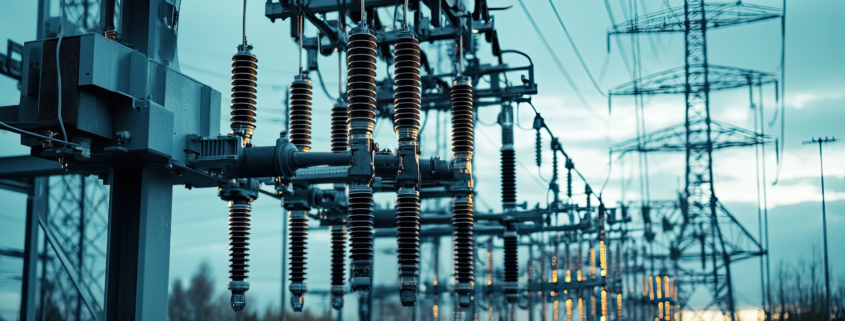
The Order’s definition of “bulk-power system electric equipment” is broad and includes items used in bulk-power system substations, control rooms, or power generating stations. Importantly, the Order also expressly contemplates the consideration of associated software, firmware, remote-access capabilities, lifecycle maintenance and update mechanisms, and other supply-chain dependencies when determining whether equipment presents an unacceptable risk.
Who is a “Covered Foreign Entity”?
The Order defines a “Covered Foreign Entity” as: (1) a country subject to a U.S. arms embargo or sanctions regime under the International Traffic in Arms Regulations (ITAR) 22 C.F.R. § 126.1; (2) a person owned or controlled by, or subject to the jurisdiction or direction of, such a government; or (3) another country/person that the Secretary determines is engaged in conduct detrimental to U.S. national security or foreign policy. The broad authority to define Covered Foreign Entity could prove important when this is used as we have seen with other broad authorities in the realm of national security (e.g., the Committee on Foreign Investment in the United States actions in general or more recent Pentagon uses of supply chain security authorities to go after Anthropic).
Key Takeaways
- Supply Chain Risks: The Order is another point of emphasis on the importance of supply chain risk management. Vendors and manufacturers should consider dedicating time to investigating the sourcing of their supplies and review the overlapping supply chain compliance issues, even if you don’t consider your business to be primarily “defense” or “national security”. This is particularly applicable to contractors who are manufacturing or supplying equipment to the United States Government in any capacity.
- Existing Foreign Equipment: Utilities and other entities operating the U.S. bulk-power system should consider developing an inventory of foreign-manufactured or foreign-operated equipment currently installed in their systems. Companies should also identify the manufacturers and suppliers of associated software, firmware, remote-access systems, and lifecycle maintenance services. Because the Order authorizes the Secretary to require monitoring, isolation, replacement, or removal of certain equipment already in operation, maintaining accurate information about the origin and supply chain of installed equipment may become increasingly important.
- Foreign Ownership, Control, or Influence (FOCI): The Order also is another example of increased government scrutiny of not just foreign companies and suppliers but also of U.S. companies that are under some level of FOCI. As we discussed in our articles on Section 847 and the expanded scope of FOCI review into unclassified contracts, this Order’s definition of “Covered Foreign Entity” could sweep in U.S. entities that are under significant FOCI shows the continued trend toward skepticism toward foreign actors in this area.
- Federal Contractors: The Order is also likely to affect Federal contractors involved in energy infrastructure projects. Within 180 days of the Order, the Secretary must develop and submit recommended revisions to the Federal Acquisition Regulation (FAR) to ensure that national security risks are adequately considered in Federal procurements and to prioritize U.S.-manufactured energy infrastructure. The FAR Council will then have 90 days after receiving those recommendations to consider proposing corresponding FAR amendments for public comment. Federal contractors should therefore anticipate potential changes to procurement requirements, sourcing expectations, and supply-chain representations or restrictions applicable to energy infrastructure procurements.
- Threats to Critical Infrastructure: The Order is a signal that the federal government is increasingly viewing the country’s power system and critical infrastructure as key points of vulnerability. Such vulnerabilities have been revealed through recent Iranian cyber-attacks, including against U.S. water systems and a power plant in the United Kingdom. Therefore, a focus on component and equipment sourcing is a reasonable approach in addressing those vulnerabilities.
Looking Ahead
While the Order establishes a general framework for restricting the foreign supply of critical energy infrastructure, many of the most consequential details, such as which countries, companies, equipment, and transactions will ultimately be restricted, remain to be determined by DOE. The first major deadline is December 24, 2026, when DOE must publish implementing rules or regulations to implement the Order. The next major date is February 22, 2027, when DOE must submit recommended FAR revisions concerning Federal energy-infrastructure procurements.
With the large-scale adoption and advancement of artificial intelligence in our everyday lives, energy generation and transmission is becoming increasingly important. The Order recognizes the risks growing from such infrastructure changes and reflects a new status quo for supply chain management and component sourcing. For advice on complying with the Order’s new directives, contact Fluet’s Government Contracts team.


